
How Often Should You Report to Your Investors? The Ideal Reporting Frequency
Maintaining investor communication is the key responsibility of each real estate syndication or sponsor. Of course, high returns are crucial, but not the only thing that investors are concerned about. Effective, open, and timely communication will help you gain trust and demonstrate professionalism.
The question is very popular among real estate sponsors: How often should I keep my investors updated?
As there is no definite answer to it since every investment differs from others, the most successful syndicators realize that having the right reporting frequency is no less important than managing a real estate asset. It’s always beneficial for investors to know how the project performs and what problems exist and how they are handled.
This article explains the ideal reporting frequency, benefits, common mistakes, and ways to create an efficient investor reporting system with CCN Business Consulting.
Importance of Frequency of Reporting to Investors
Investment reports go beyond being mere financial statements. Rather, they act as a conduit through which sponsors connect with investors and stay connected and maintain trust in your abilities as a leader.
Here are some key advantages of having an appropriate report calendar.
- Establishes Investor Trust
Trust plays a fundamental role in every real estate investment collaboration. The investors are placing their trust in you by investing money in your company.
- You monitor the property’s performance.
- You are organized and accountable.
- There is nothing you need to hide.
- You respect your investors.
No matter what the performance is like, the investors prefer honesty over silence even when the performance is not ideal.
For instance, if the occupancy level drops for a while due to renovations, informing the investors that everything is under control is far better than leaving them guessing about anything.
- Manages Investor Expectations
Investors get annoyed when they don’t know what’s going on.
Reporting in regular intervals will help to create expectations about:
- Property performance
- Distribution schedule
- Renovations schedule
- Market conditions
- Occupancy levels
- Capital improvement
If the expectations are properly managed, then any surprises become a lot easier to handle by the investors.
- Builds Long-Term Relationships
It is not the end of the communication once the money is secured.
Sponsors who keep in touch often build stronger relationships, which result in:
Reinvestments
Greater investments next time
References
Increased retention of investors
It is easier for people to make investments when they feel informed about the entire investment process.
- Exhibits Professionalism
Professional communication is one distinguishing factor between a professional sponsor and an unprofessional operator.
If you report consistently, it means that you run your business with a well-oiled machine in place as opposed to acting on impulse when investors ask for reports.
Professional communication makes everything about your business look good.
- Lowers Investor Worries
When silence persists, investors tend to think of the worst.
Regardless of whether things are going well, sending a brief message can put worried investors’ minds at ease.
Good communication can save many emails and calls from worried investors.
Choosing the Appropriate Reporting Schedule
In the case of most real estate syndicators, there are two common options for reporting:
- Monthly reporting schedule
- Quarterly reporting schedule
These methods have their own pros based on the type of investment.
Monthly Reporting: The Modern Way
Modern successful syndicators choose to report monthly due to the growing need for frequent communication among investors.
Monthly reporting is important when the business plan is active and changes happen every month.
It suits well for the following situations:
- Value-add apartments projects
- High-renovation projects
- New acquisitions
- Developments
- Sponsors that build up their reputation
- Groups of investors who demand more information
Frequent communication builds trust while letting investors watch the progress of the property’s
progress.
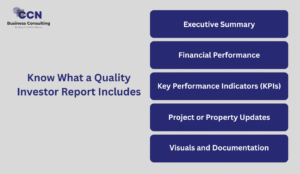
What Should Be Included in Monthly Reports?
It is not necessary for a monthly report to contain much detail.
Instead, ensure that the report contains the following updates:
Occupancy Status
Include the current occupancy rate as well as leasing information.
These include:
- Signed leases
- Renewals
- Vacancies
- Percentage of vacancy
- Trends regarding leasing
This allows the investor to know if they are meeting their revenue targets.
Renovation Progress
In case of value-add properties, renovations play a critical role.
Include information about:
- Units renovated
- Units under renovation
- Budget situation
- Progress of timeline
- Improvements made
- Effects on rental income
Visuals with pictures can go a long way in engaging investors.
Financial Successes
Don’t overwhelm your investors with detailed accounting records; highlight some key financial metrics.
These would include:
- Rent received
- Operating costs
- Net Operating Income (NOI)
- Reserves
- Distribution situation
Comparisons and charts will help in making sense of financial data.
Operational Successes
Highlight achievements like:
- Improved occupancy
- Higher rental rates
- Completion of renovations
- Positive feedback from residents
- Cost savings
- Improved cash flow
Investors love seeing their business goals achieved.
Challenges and Solutions
No investment has perfect months.
In the event of difficulties, state:
- What happened
- Why it happened
- Management’s response
- Timeline for resolution
- Truthfulness builds credibility.
Quarterly Reporting: The Standard Approach
Quarterly reporting has been standard practice in the industry for many years and will continue to be appropriate for many stabilized properties.
Since there are usually few changes in operations, monthly reporting might not always be necessary.
Quarterly reporting is suitable for:
- Stabilized multifamily properties
- Hold properties
- Stable properties
- Mature portfolios
- Experienced sponsors and investors
- Updates might be less frequent but complete.
What Should Quarterly Reports Contain?
Comprehensive Financial Information
The quarterly report should include more information than the monthly reports.
Should include:
- Income Statement
- Balance sheet
- Cash Flow statement
- Net Operating income
- Capital expenditure
- Reserve balance
These reports give an investor all the financial information about the property.
Budget and Actual Performance Comparison
Compare the actual outcome to your budget projections.
Consider:
- Difference between revenues
- Expense variance
- Occupancy rate
- Cash flow performance
Above all, give reasons for any notable variances.
Market Update
The investors will also need market information.
This includes updates on:
- Rental demand in the market
- Job creation
- Interest rates
- Performance of other properties
- Developments in the market
- Economic factors impacting operations
Summary of Distributions
Each quarterly report must include investor distributions.
These should consist of:
- Distribution amount
- Date of distribution
- Annualized return
- Whether preferred return or not
- Future expectations of distributions
Proper reporting will help avoid investor confusion in relation to cash flow.
Striking a Balance
The most effective approach to reporting is consistent yet relevant.
Instead of choosing monthly or quarterly reporting alone, the most successful sponsors adopt an integrated approach.
An appropriate reporting schedule would be one that includes:
- Monthly updates in relation to operations that will give progress in areas such as leasing, renovations, occupancy and significant milestones.
- Quarterly financial reports including the financial statements, comparative analysis and distribution summary.
- Any special report in case of any significant development in the investment.
Communication When It Is Required
Some situations demand urgent communication irrespective of your regular reporting cycle.
Major Capital Milestones
It is important that you inform investors immediately when any major financial milestones happen such as:
- Real estate purchases
- Refinancings
- Selling of real estate assets
- Capital calls
- Big refinancing amounts
They have direct consequences on your investors’ earnings.
Unexpected Economic Events
Economic events that may negatively affect investments:
- Increasing interest rates
- Changes in loan covenants
- Downturns in local economy
- Regulatory changes
- Disasters impacting business operations
Proactive communication will help to show good management.
Business Plan Delays
Not all projects move according to plan.
Open communication regarding project delays should include:
- Rehabilitation
- Construction
- Leasing
- Permits
- Availability of contractors
Investors prefer realism over unrealistic estimates.
Unforeseen Costs or Underperformance
Investors never expect perfection.
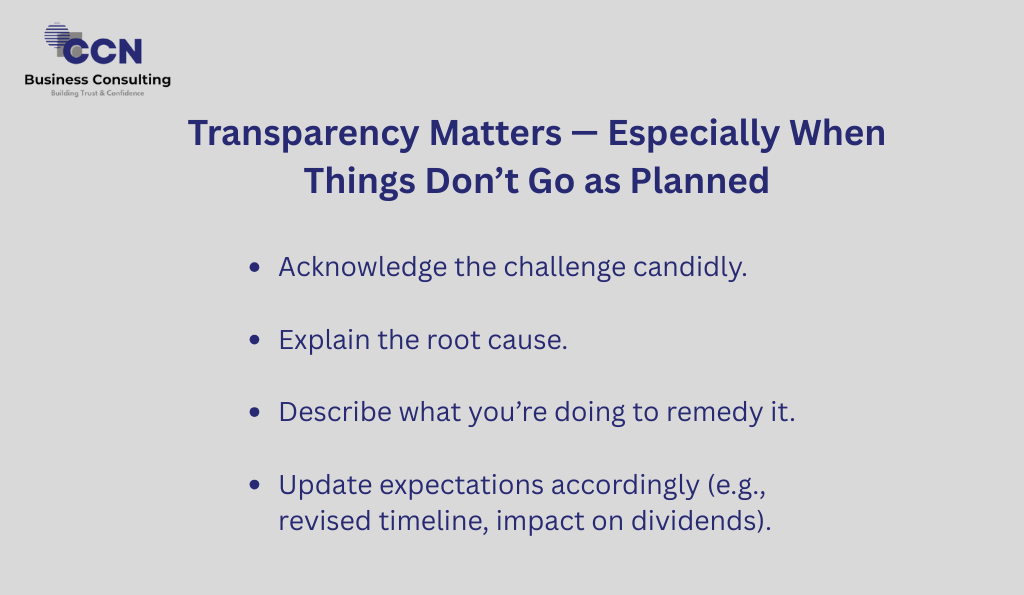
But they do expect transparency.
In case of any unforeseen costs, vacancies, insurance claims, or losses from operations, explain:
- What happened
- The financial effect
- The measures taken to address the problem
- The future outlook.
Investor Communication Blunders
Even seasoned syndicators sometimes make reporting blunders that undermine investor confidence.
- Providing Excessive Information Without Context
- Facts alone usually don’t tell the whole truth.
- Rather than drowning your investors in data, provide them with:
- Meaning behind the facts
- Reasons for change
- Actions taken by management
- Context gives meaning to financial data.
- Communicating Only When Everything Is Going Well
There are sponsors who only communicate when things are going well.
This strategy usually doesn’t work out well.
Inconsistent Reporting
Missing deadlines or sending reports sporadically creates uncertainty.
Establish a reporting calendar and follow it consistently.
Reliability builds confidence.
Using Generic Updates
Investors prefer updates tailored to their specific investment rather than generic newsletters.
Include property-specific information whenever possible.
Personalized reporting creates stronger investor engagement.
Why Good Communication Is Important for Competitive Advantage
Many syndicators tend to compete based on projected returns.
Good communication can turn out to be an important competitive advantage for return customers.
Regular reporting will enable you to:
- Earn the trust of your investors.
- Answer similar questions less frequently.
- Showcase your organizational proficiency.
- Increase investor retention.
- Raise bigger investments in the future.
- Refer new business opportunities through happy clients.
- Stand out against other syndicators.
People will remember whether you communicated efficiently as well as their returns.
Guidelines for Effective Investor Reporting
For optimal impact in your investor communication:
- Adhere to a consistent schedule for reporting.
- Talk about not just achievements but problems, too.
- Use plain language rather than lots of financial terms.
- Incorporate pictures like graphs, charts, and images of the property.
- Provide context for the figures.
- Answer investors’ questions immediately.
- Make sure the report is succinct and clear.
Consistency and clarity are much more important than extensive reports with too many facts.
Final Thoughts
No magic number can work for all the cases of real estate investments in terms of the right reporting period. It always depends on how you plan to manage your investment, at which stage your property is, and what your investors expect. Yet, there is one thing which is true all the time: communication helps establish better relationships with investors.
Regardless of whether you will decide to update your investors on a monthly basis, quarterly or both, make sure that you are reporting on regular intervals providing some valuable information. You should not only provide numbers but also prove that your investors can be confident that their money will be used appropriately and they will get timely updates about their investment.
Investors invest into people as well as into projects. Thus, an appropriate reporting cadence will show your professionalism and dedication.
How CCN Business Consulting Services Help Real Estate Investors
At CCN Business Consulting, we know that effective investor communication is crucial when starting up and running a thriving business in real estate investing. In addition to creating financial statements, we also assist sponsors to build an effective communication system that fosters confidence and builds good rapport with investors.
The services provided include:
- Investor reporting strategy development based on your investment.
- Creation of monthly and quarterly reporting templates.
- Financial report preparation that is clear, precise, and investor friendly.
- Development of an effective communication process that saves time and increases consistency.
- Support in announcements about capital events and distribution.
- Long-term building of investor trust through transparency and accountability.
If you are planning your first real estate syndication or handling an increasing number of investment properties, then at CCN Business Consulting you can get the required financial skills and solutions for effective communication.