
How Often Should You Update Investors? Finding the Right Reporting Cadence
While communication can be thought of as an added touch, it is a vital component of your fiduciary duty in the context of real estate syndication. In addition to judging your success rate, your potential investors will judge your reliability and professionalism. One of the most frequently asked questions by many sponsors revolves around frequency: how often should I communicate with my investors?
The Importance of Your Reporting Frequency
Your communications with investors go beyond figures. There are three primary benefits of doing so:
- Boosting trust: Keeping in constant contact shows that you know what you’re doing and care about your investments.
- Setting reasonable expectations: This makes sure that there will be no unpleasant surprises for you or the investors.
- Creating connections: People who know everything going on with their investment are much more likely to invest again.
- Lack of consistent and regular communication creates confusion. And when it comes to investing, confusion leads to doubt.
Typical Reporting Cycles: Monthly vs Quarterly
Most real estate syndicators can be grouped into one of two categories:
Monthly Reports (Best for Proactive Reporting)
Monthly reports have been increasingly recognized as the standard, particularly by those operators aiming to distinguish themselves.
Best for:
- Value-added investments
- Syndicators that need to build credibility
- Investors focused on experience
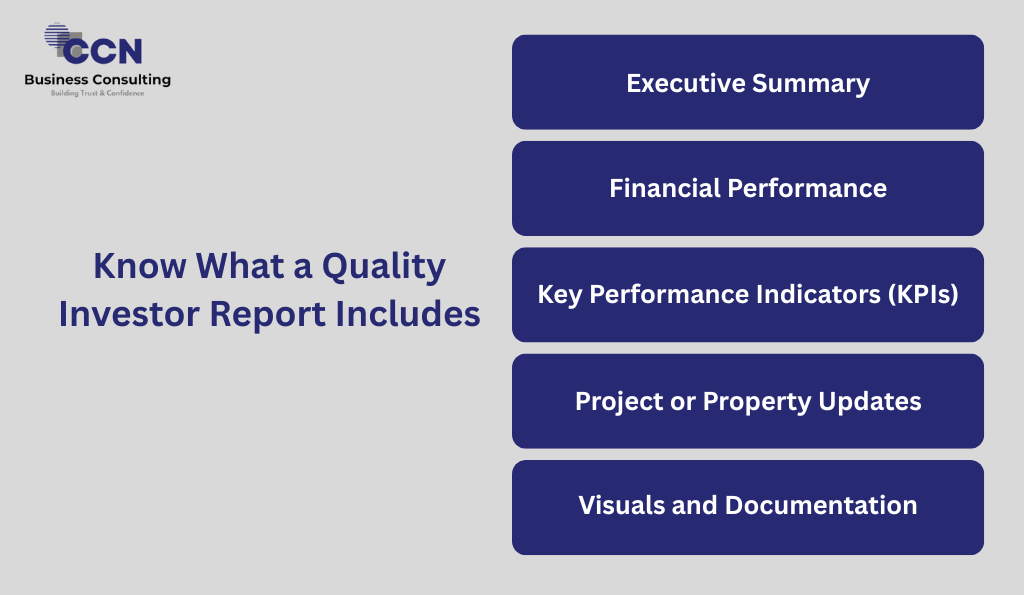
Contents of monthly reports:
- Leasing status
- Renovation status
- Main financial information
- Challenges and successes
Monthly reports do not have to cover every aspect exhaustively.
Quarterly Reports (Conventional Way)
Quarterly reporting remains popular, especially for stabilized properties.
Appropriate for:
- Properties meant for long-term investment
- Low level of change in the operations
- Professional sponsors with reliable investor base
Reporting must include:
- Financial information
- Comparison with projected results
- Snapshots of the market
- Listing of all distributions
But there’s a problem; investors can feel like they’re in the dark until the next report is released—particularly amid an uncertain environment.
Striking a Balance
Frequency is not the objective; relevance & consistency are!
A more relevant approach would be:
- Default to monthly communication, regardless of how little information you have
- Include detailed financial information on a quarterly basis
- Send more reports when something significant happens!
Times When You Need To Communicate More Frequently
In addition to your normal frequency of communication, there are some instances that require you to communicate more frequently:
- Large capital events (refinance, sale, capital call)
- Turning points in the market
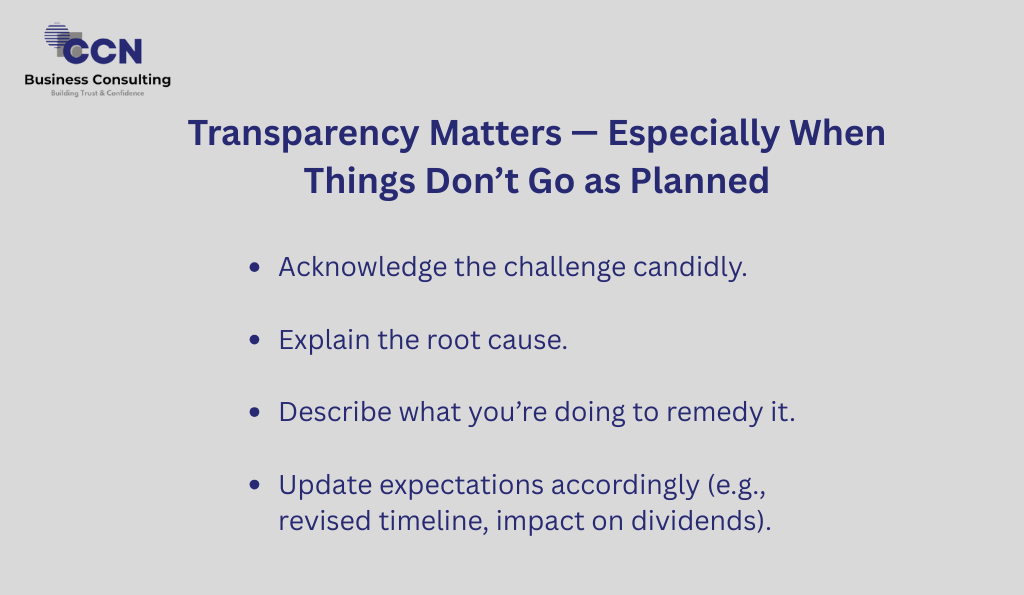
- Delay in implementing business plans
- Unplanned expenses/underperformance
This is when investors lose trust very quickly.
Communication Pitfalls to Avoid
Syndicators make this mistake even when they have years of experience under their belt. Common mistakes include:
- Flooding people with information but providing no explanation
- Communicating only when everything is going smoothly
- Timing inconsistencies: Missing deadlines and sending communications irregularly
- Being generic and impersonal
Investors need information AND analysis.
Reporting and Competitive Advantage
Let’s be honest: Returns receive all the glory, but communication earns loyalty.
A good reporting cadence:
- Lessens any questions or concerns of the investor
- Shows your professionalism
- Encourages a higher return rate of investments
- Naturally generates referrals
This will definitely make you stand out among other syndicators.
Final Words
In case you’re still not sure how to do this, try this:
- Communicate regularly
- convey your ideas effectively, not just facts
- Stick to it regardless of anything
After all, investors invest not only in the projects, but also in operators.
What CCN Business Consulting Can Do for Your Business
As professionals, we recognize that investor communication goes further than mere operations.
With our platform, CCN Business Consulting, we guide real estate sponsors through the process of:
- Building professional investor reporting strategies
- Creating a system of effective communication
- Simplifying the process of updating while maintaining the necessary connection with investors
- Building a relationship based on transparency
Regardless of whether you are just starting out or have already gained significant experience, a good reporting cadence is an indispensable advantage.