Accounting for Real Estate Development Projects: Key Considerations
When it comes to real estate development, the numbers tell the real story. You can have premium land, a well-known architect, and strong investor backing—but if your accounting isn’t structured correctly, profitability can disappear quickly.
At CCN Business Consulting, we work closely with developers, investors, and construction firms to ensure financial clarity from acquisition to project exit. In this guide, we break down the core accounting principles every real estate developer must understand to protect capital, maintain compliance, and maximize returns.
Why Proper Accounting Matters in Real Estate Development
Real estate development is capital-intensive, long-term, and financially layered. Projects move through acquisition, entitlement, construction, stabilization, and sale—each phase with its own accounting challenges.
Poor accounting practices can lead to:
- Misstated profits or losses
- Investor disputes
- Loan covenant violations
- Cash flow shortages
- Tax penalties and audit exposure
On the other hand, structured accounting allows you to:
- Track real-time project performance
- Strengthen investor reporting
- Improve financing outcomes
- Maintain clean, auditable financial statements
Our Real Estate Accounting & Advisory Services are designed to support development firms at every stage of the project lifecycle.
1. Cost Capitalization: What’s Capitalized vs. Expensed
One of the most critical accounting decisions in real estate development is determining which costs are capitalized and which are expensed.
Costs Typically Capitalized:
- Land acquisition
- Construction materials and labor
- Architectural & engineering fees
- Permit and zoning costs
- Legal fees directly tied to development
- Construction loan interest (during active build)
Costs Typically Expensed:
- General overhead not project-specific
- Marketing before project completion
- Feasibility and early-stage due diligence
- Admin and non-project travel
Why it Matters:
Misclassification can distort profitability and trigger tax issues. Capitalization defers expense recognition, while expensing immediately impacts net income.
2. Hard Costs vs. Soft Costs
Understanding this distinction helps with budgeting, investor reporting, and lender communication.
Hard Costs (Physical Construction):
- Building materials
- Construction labor
- Site preparation
- Equipment rentals
- Utilities during construction
Soft Costs (Indirect but Essential):
- Architect & engineering fees
- Insurance
- Legal & permitting
- Project management
- Financing fees
Both hard and soft costs can usually be capitalized if directly tied to construction.
3. Construction in Progress (CIP) Accounting
The Construction in Progress (CIP) account tracks all accumulated development costs until the project is substantially complete.
How CIP Works:
- All qualifying costs flow into CIP
- No depreciation is taken during construction
- Upon completion:
- Transferred to Fixed Assets (for rentals)
- Transferred to Inventory (for properties held for sale)
- Transferred to Fixed Assets (for rentals)
CIP allows:
- Accurate cost tracking
- Clean audit trails
- Proper timing of depreciation
- Investor transparency
4. Accounting for Interest Costs: Capitalization of Loan Interest
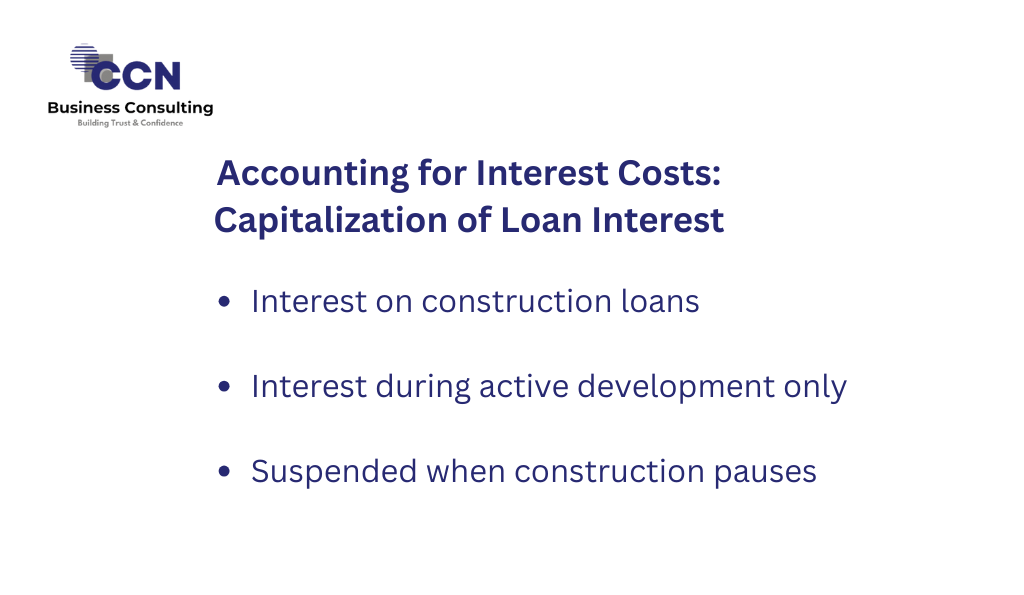
If your project is financed, interest incurred during active construction is usually capitalized rather than expensed.
Includes:
- Interest on construction loans
- Interest during active development only
- Suspended when construction pauses
This follows the matching principle, aligning financing costs with the asset being created.
5. Revenue Recognition: Completed Contract vs. Percentage of Completion
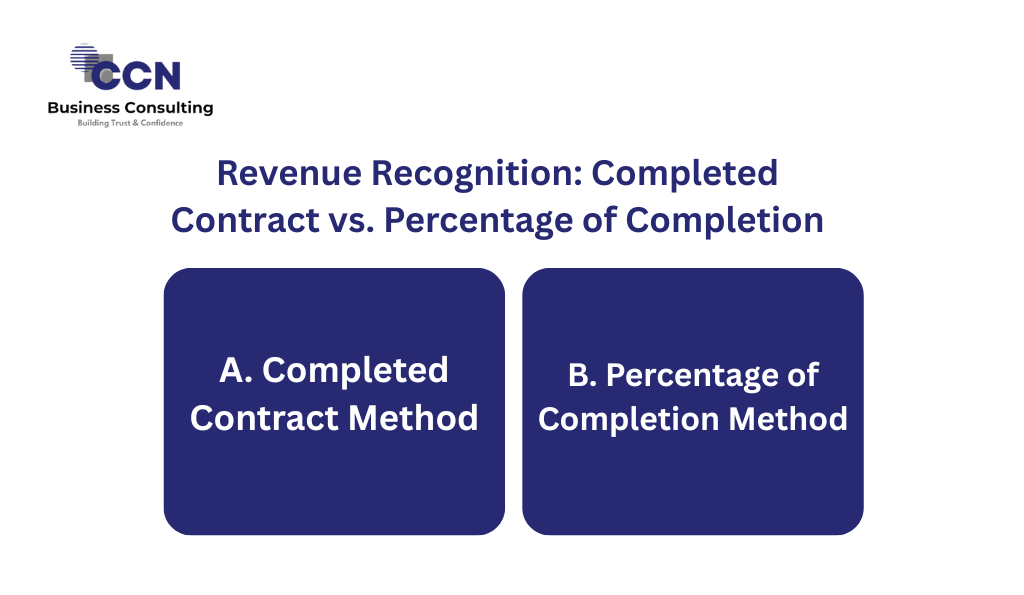
Your revenue recognition method impacts cash flow reporting, taxes, and investor distributions.
A. Completed Contract Method
- Revenue recognized only when project is fully complete
- Conservative approach
- Used when cost estimates are uncertain
B. Percentage of Completion Method
- Revenue recognized proportionally during construction
- Requires reliable cost estimation
- Better for multi-phase or long-term developments
The method you choose directly affects profitability timing and tax exposure.
6. Budgeting and Forecasting
Accounting is not just about recording history—it’s about preparing for what’s next.
Effective forecasting allows developers to:
- Predict cash shortages
- Adjust financing strategies
- Re-evaluate project margins
- Communicate transparently with investors
Best Practice:
Use rolling forecasts updated monthly or quarterly for multi-year projects.
7. Tax Considerations and Depreciation
Tax treatment depends on whether the property is sold or held.
For-Sale Properties:
- Profit taxed as business income
Rental/Held Properties:
- Depreciated over time
- Residential: 27.5 years
- Commercial: 39 years
- Residential: 27.5 years
Cost Segregation Studies can accelerate depreciation and significantly reduce taxable income.
Our Tax Planning & Compliance Services help developers structure projects for maximum after-tax returns.
8. Accounting Software and Tools
Modern development projects require modern accounting systems.
Key Features to Look For:
- Job costing
- CIP tracking
- Progress billing
- Budget forecasting
- Integration with project management
Popular Industry Tools:
- QuickBooks Online
- Buildertrend
- Yardi (large portfolios)
- Sage Construction
We help clients select and implement the right software through our Accounting & CFO Services.
FAQs
Q: Can all development costs be capitalized?
No. Only costs directly related to construction and preparation for use or sale qualify. General admin, feasibility studies, and unrelated overhead are expensed.
Q: When do I move from CIP to Fixed Assets or Inventory?
When the project is substantially complete and ready for its intended use—leasing, selling, or occupying.
Q: What’s the biggest accounting mistake in real estate development?
Misclassifying costs and failing to update budgets regularly. These lead to tax problems and cash shortages.
Q: How often should budgets be updated?
At least monthly, especially when costs or timelines change.
The Bottom Line
Real estate development accounting isn’t just bookkeeping—it’s a risk management and profitability tool.
From proper capitalization and revenue recognition to forecasting and depreciation strategy, accounting decisions determine whether your project thrives or struggles.
Whether you’re building a single-family project or a multi-phase mixed-use development, working with a specialized real estate accounting firm from day one can save you millions in lost profit and tax exposure.
Work With CCN Business Consulting
At CCN Business Consulting, we specialize in real estate accounting, tax advisory, and CFO services for developers, investors, and fund managers.
Ready to take the next step?
Contact our real estate advisory team today for a personalized consultation.